
Turn complex facts into clear, courtroom-ready visual evidence that supports testimony and keeps jurors oriented.
We create litigation visuals, including forensic animation, courtroom graphics, 3D models, and medical animations built from the record and expert input when needed.
Use them in mediation, deposition, and trial presentation to explain sequence, causation, and damages without confusion.
From personal injury animation to product and liability timelines, every frame is designed for clarity, accuracy, and credibility.
When a brutal pitbull attack left an elderly man severely injured, forensic animation made the horror undeniable. Courtroom Animation’s visuals helped the plaintiff’s attorney secure a $500,000 policy limits settlement before trial proving the power of demonstrative evidence in emotionally charged cases.

In-depth knowledge of legal concepts and terminology ensures your content is accurate and impactful.
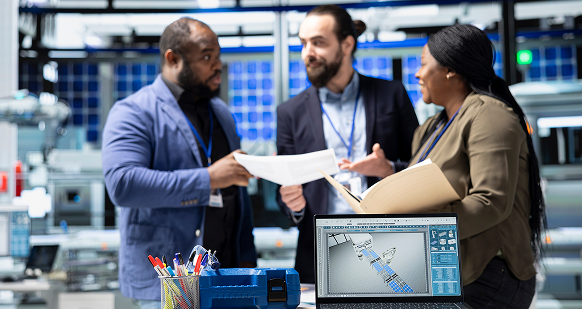
Custom animations that cater specifically to the legal industry’s needs, whether for client engagement, education, or professional development.
Utilize the power of storytelling and high-quality animation to make legal content more accessible and persuasive.

From single animations to extensive series, our services are designed to scale with your project’s requirements.
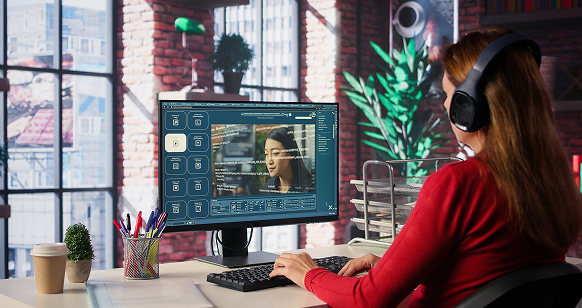
We deliver animations that are clear, precise, and visually compelling, enhancing your legal presentations and materials.
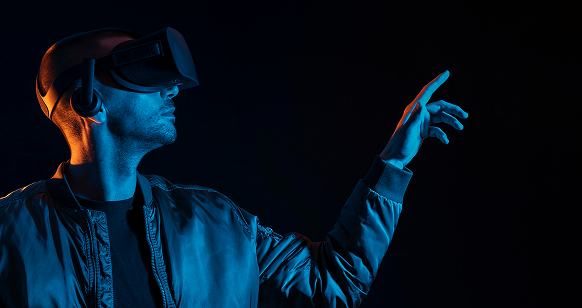
Incorporating the latest in animation and interactive technologies to create immersive and dynamic legal educational experiences.
Demonstrative evidence is a visual aid used to support and explain witness testimony. It helps the judge and jury understand what happened, where it happened, and how it happened, without asking them to “mentally animate” the facts on their own.
It is important to separate demonstratives from substantive proof:
In practice, most demonstratives exist to answer one simple juror question: “Can you show me what you mean?” That is why so many effective demonstrative evidence examples are not flashy. They are clear, accurate, and easy to follow under pressure.
A real-world example: In a commercial dispute, the “story” often lives inside hundreds of emails, invoices, and meeting notes. A one-page timeline that ties key communications to payment activity can turn a confusing record into a readable sequence, while still pointing back to the underlying exhibits.
Jurors are not case managers. They are everyday people hearing unfamiliar concepts in a formal setting, with limited time. Even strong testimony can lose impact if it is hard to visualize.
Demonstrative evidence matters because it helps you:
Where firms gain an edge is not “having visuals.” It is having visuals built in a way that holds up when the other side challenges them. That is where experience shows.
A practical standard we follow is simple: every graphic should survive the question, “What is this based on?” If the answer is messy, the demonstrative becomes a distraction. If the answer is disciplined, the demonstrative becomes a force multiplier.
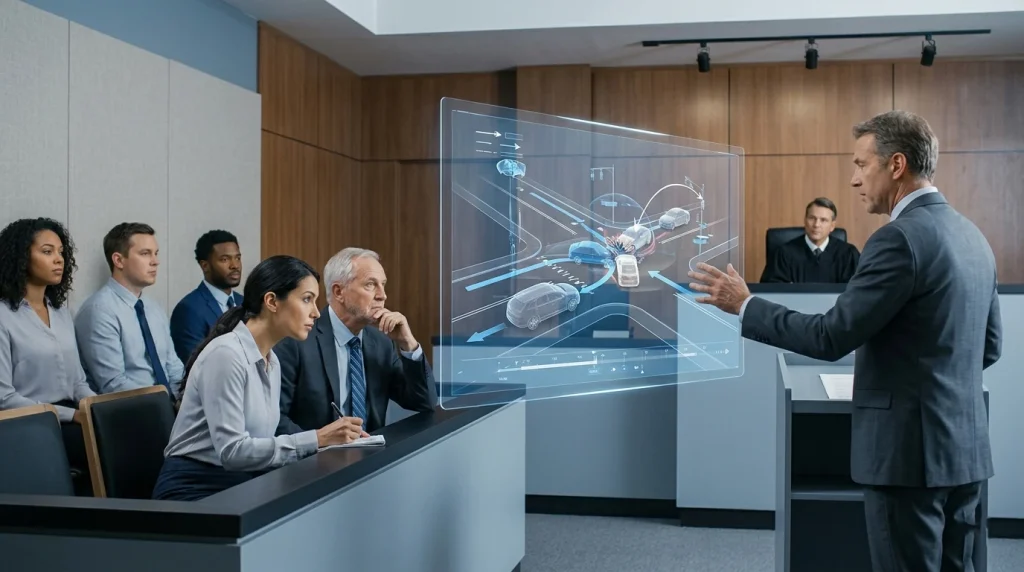
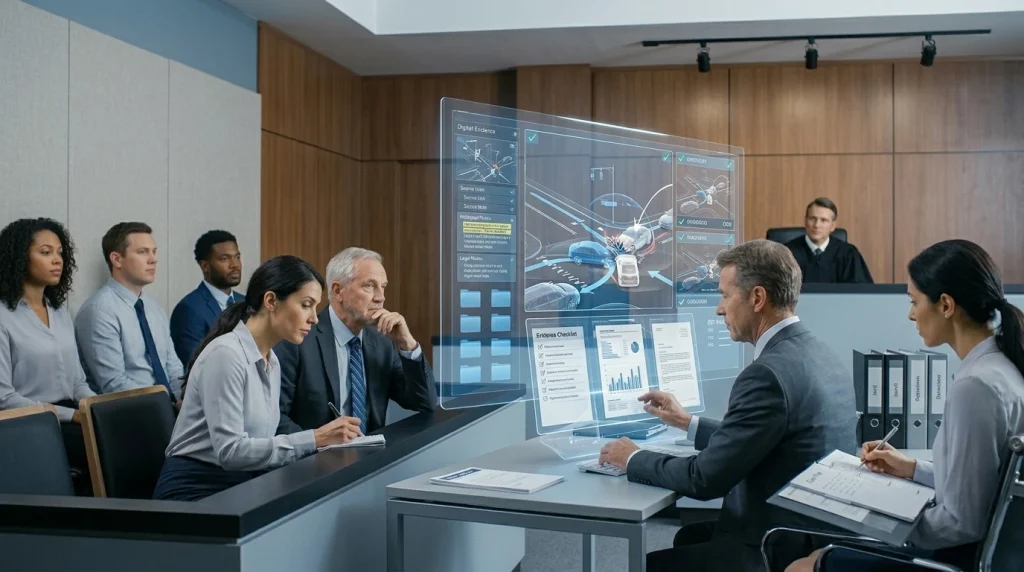
Courts generally allow demonstratives when they are relevant, accurate enough to assist, and not unfairly prejudicial or misleading. The specific approach varies by judge and jurisdiction, but in federal court the framework often maps to the Federal Rules of Evidence:
In plain language, the judge wants to know:
This is why the build process matters as much as the final design. To support admissibility and reduce motion practice, we use a documentation-first workflow that most litigators recognize immediately:
When counsel needs it, we also provide practical support materials like a source packet and slide notes, so your witness can lay foundation cleanly and your team can respond quickly if opposing counsel objects.
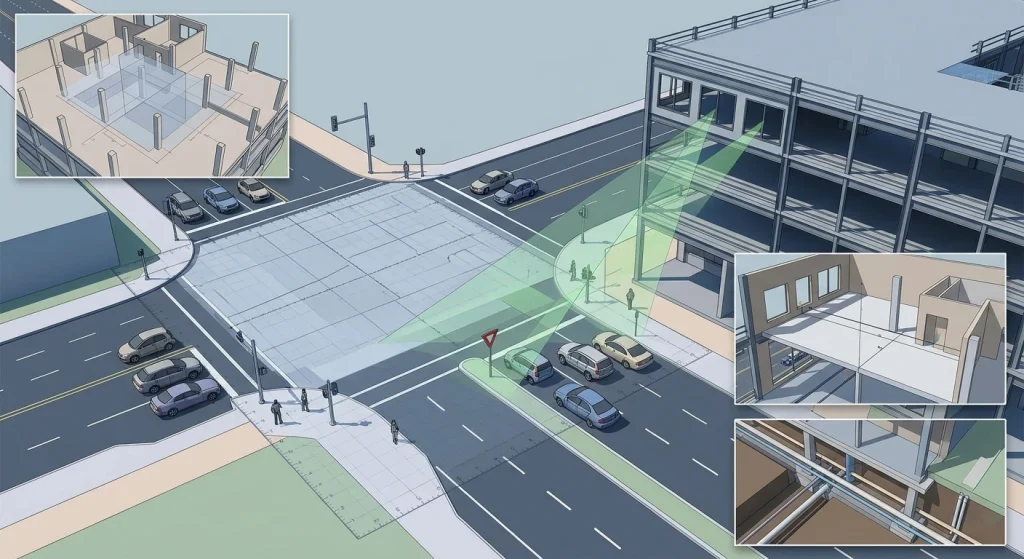
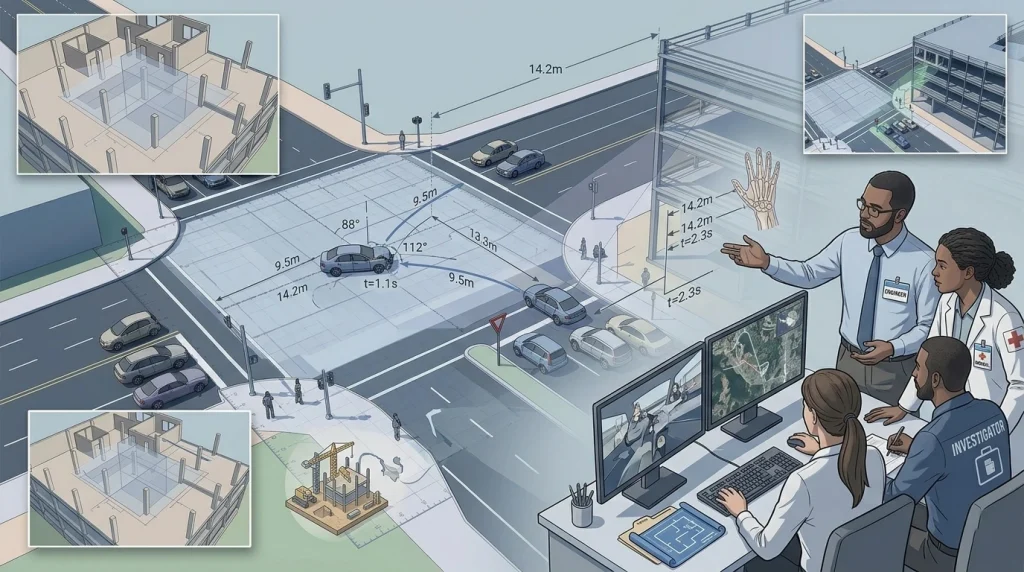
3D models are ideal when space, distance, and line of sight matter. They are commonly used for intersections, job sites, premises layouts, product component relationships, and event sequencing inside a physical environment.
What makes a 3D model trustworthy is not realism. It is accuracy. We prefer measurable inputs when available (surveys, laser scans, site measurements, vehicle specs, photographs with scale references). When measurements are limited, we label assumptions clearly and confirm them with the team, so the model does not overstate what it can prove.
Typical turnaround: a basic scene model can move quickly, while a complex environment with multiple viewpoints takes longer. Most firms appreciate a range, so as a general rule, expect several business days for simpler models and one to two weeks for heavier builds.
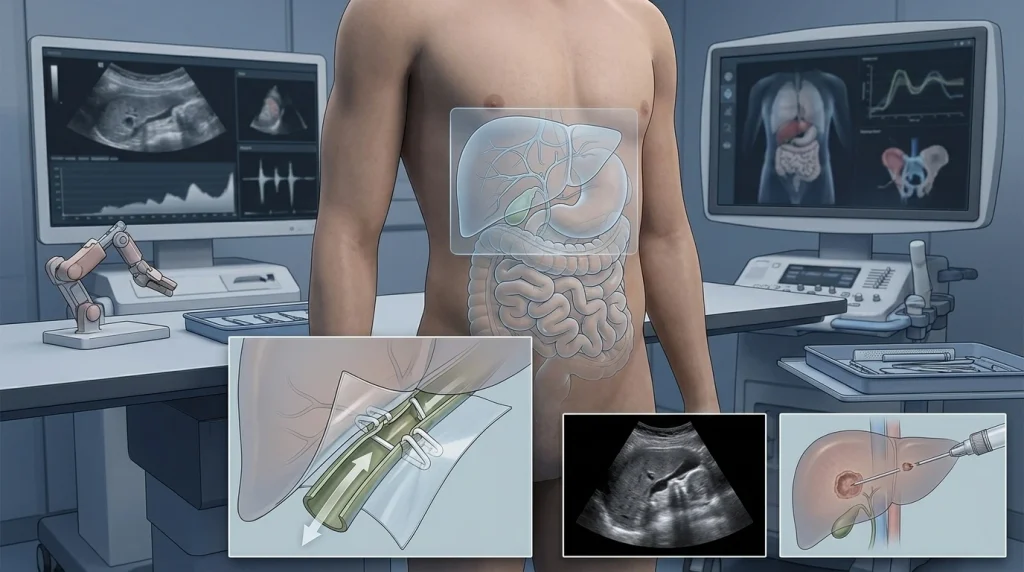
Medical animations explain anatomy, injury mechanisms, and procedures in a way jurors can actually absorb. They work well in personal injury, medical malpractice, wrongful death, and mass tort contexts.
The standard here is medical accuracy paired with plain language clarity. If a juror cannot repeat the point back in their own words, the animation is doing too much.
We build medical visuals directly from the record and expert guidance when needed, then keep the animation aligned with what the treating physician or retained expert can testify to. That alignment is what protects you when the other side argues exaggeration.
Typical turnaround: simple medical sequences can be produced in one to two weeks. More complex multi-step mechanisms and longer narratives require more time.
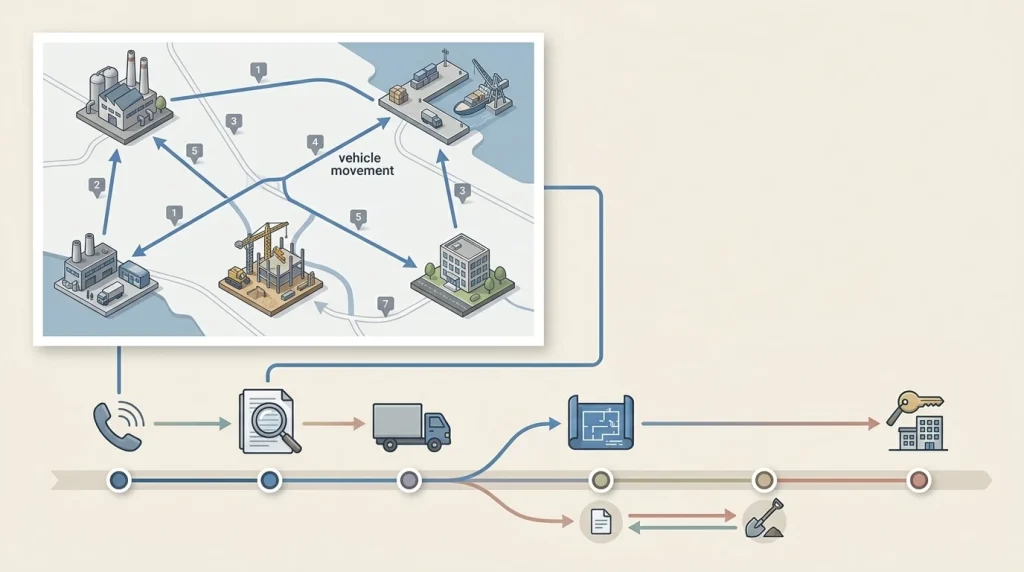
Maps and timelines are the highest-return examples of demonstrative evidence because they create immediate clarity without drama.
A strong timeline is not a list of dates. It is a structured sequence tied to the record, such as calls, dispatch logs, surveillance timestamps, chart notes, contract milestones, payment activity, or inspection history. A strong map answers basic questions fast: where, how far, which route, what could be seen, and what changed over time.
Typical turnaround: timelines and map exhibits often move fastest and can be delivered in a few business days, assuming the supporting materials are organized.
Forensic animation is a courtroom-ready visual reconstruction of events, built from case evidence and guided by qualified expertise. It is not “creative storytelling.” It is a structured way to show what the record supports when words alone leave too much room for confusion.
A proper forensic animation is usually created in collaboration with:
The standard we work by is simple: if an animation cannot be explained, sourced, and defended, it should not exist. Every motion, distance, timing cue, and viewpoint must be traceable to evidence, expert input, or clearly stated assumptions.
That is the key difference between a “nice video” and forensic animation that actually performs in depositions, mediation, and trial.
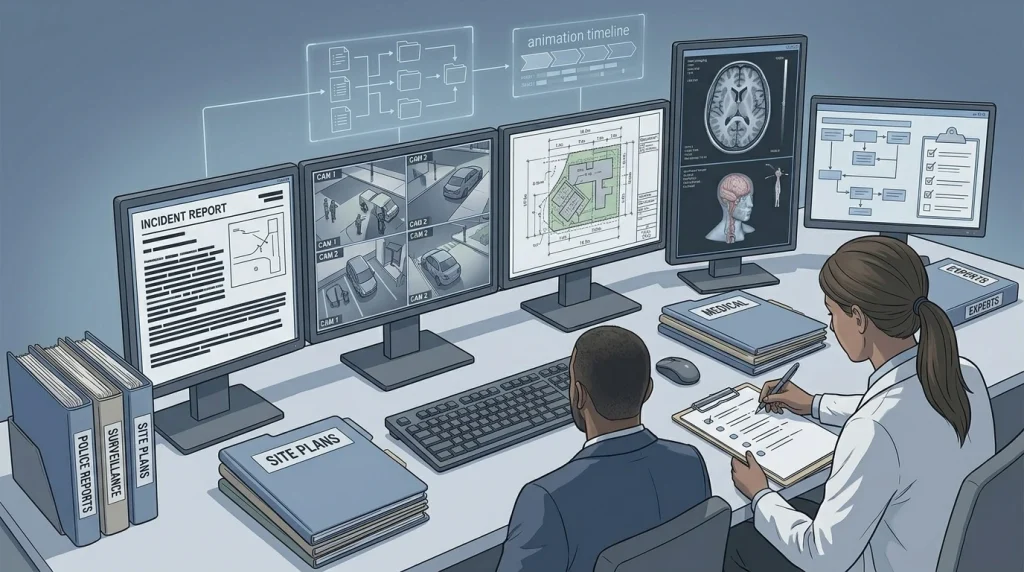
Not all forensic animation companies follow the same discipline. The ones that consistently serve law firms well have a documented process that protects accuracy and keeps the project predictable. Here is the workflow we use, and the reason each step matters.
We start by collecting the materials that will control the build. Common inputs include:
At this stage, we also define the purpose of the animation. Is it for mediation? For deposition prep. For trial. Or for all three. The target use affects pacing, detail level, and how we package supporting materials.
Next we create the 3D environment and assets needed to depict the event. This includes the setting, objects, vehicles, equipment, and relevant anatomy when medical visuals are involved.
The goal is not hyper-realism. The goal is clarity and proportion, so the viewer understands what matters.
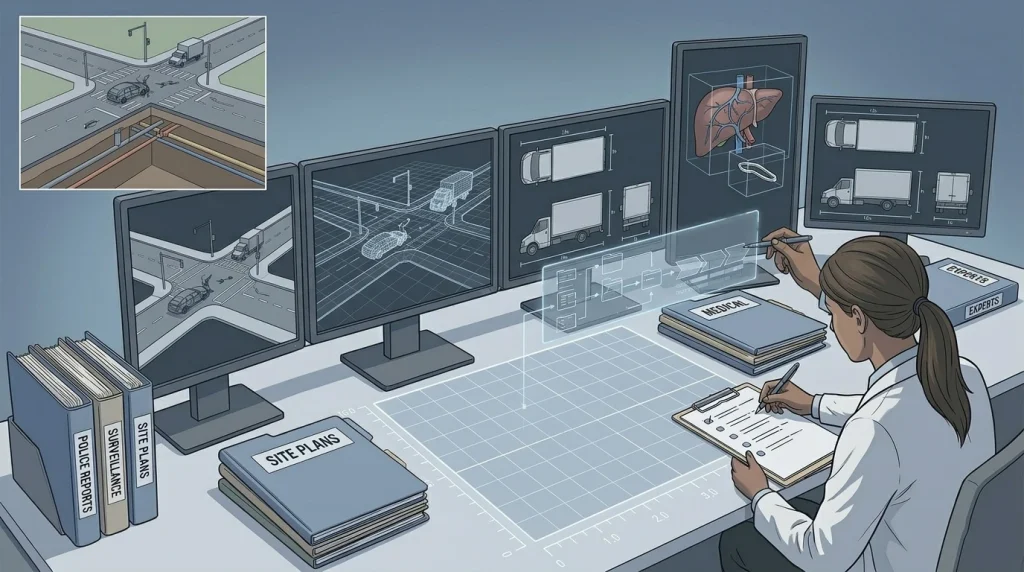
Once the scene is built, we animate the sequence based on evidence and expert guidance. This is where disciplined decision-making matters most, because animation can imply certainty.
We handle that by separating:
If there is a gap, we do not hide it. We flag it, discuss it with counsel, and document how it is treated in the visual.
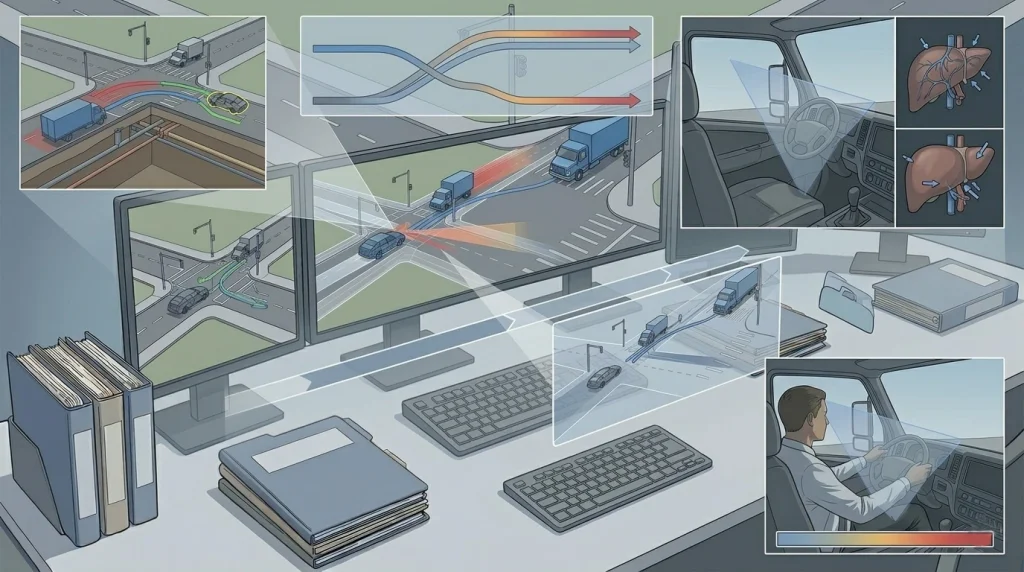
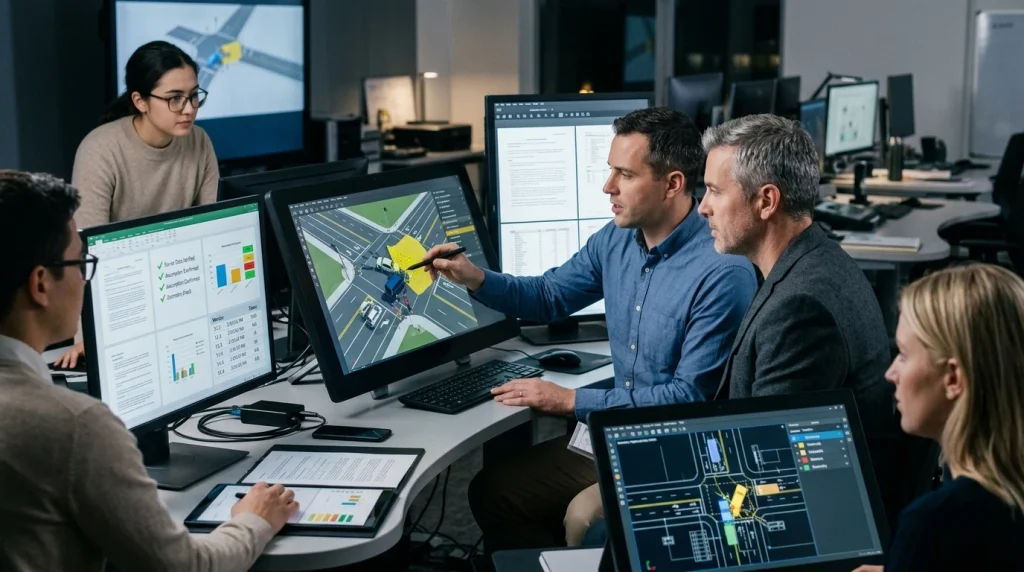
Verification is where professional work shows. Before anything is treated as final, we run a structured review with your team and, when appropriate, your expert.
That review includes:
This is also the stage where we prepare support materials, like slide notes or a source packet, so your witness can lay the foundation without guessing.
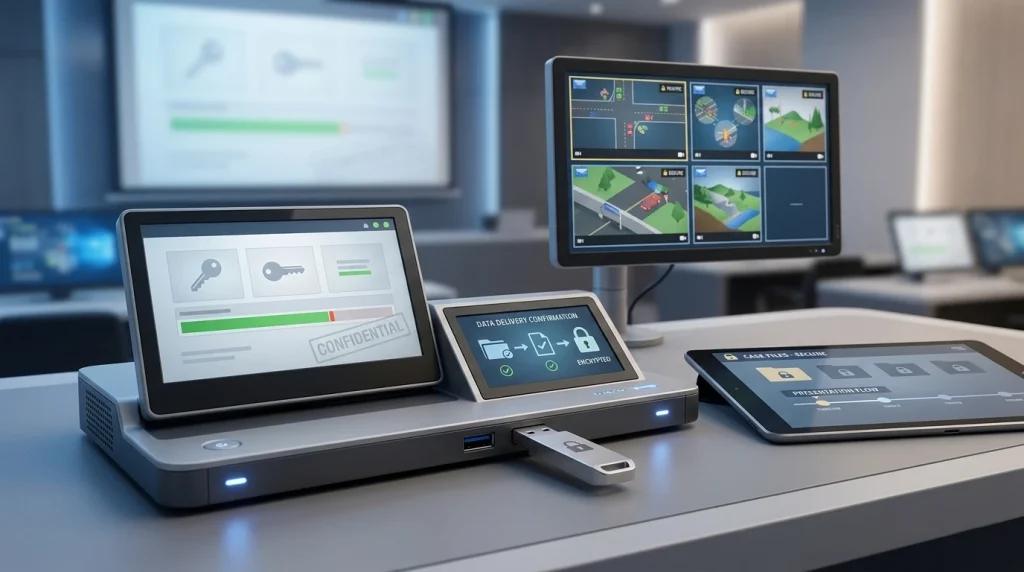
A courtroom animation company earns trust by being reliable when deadlines tighten. We deliver in the formats your team needs for mediation, trial presentation software, and in-court display, with clear labeling and organized files.
We also keep confidentiality and control in mind. Legal teams need predictable handling of sensitive materials. Secure transfer, limited access, and clear retention practices are part of doing business correctly.
Unleash the impact of visuals through our dynamic video animation solutions.

Custom animations specifically created for your legal matter or educational material, aimed at enhancing understanding and engagement.

Deconstruct complex legal subjects into easily understandable and entertaining animated explanatory videos.

Imagine courtroom situations and legal processes through intricate animations, improving comprehension for clients and learners.

Develop tailored animations that showcase the knowledge and methods of legal experts, enhancing the accessibility of their services.

Create engaging video materials that encourage active involvement and learning in legal education.

Captivating videos that enlighten and instruct legal experts in an engaging way.
The simplest way to describe forensic animation is the “time machine” effect. It gives the jury a guided way to experience the sequence without relying on memory, imagination, or scattered testimony.
This matters most in cases where:
An expert who can point to a verified visual explains faster and more confidently. That clarity travels. It helps opposing counsel understand what they are facing, and it helps your record stay clean.
A well-built animation forces discipline. It makes everyone agree on sequence, timing, and key facts. That alignment reduces internal drift between opening, examinations, and closing.
Mediation is often about comprehension. When a carrier or defense team truly sees exposure, conversations change. A tight animation can move the room from “debate” to “assessment.”
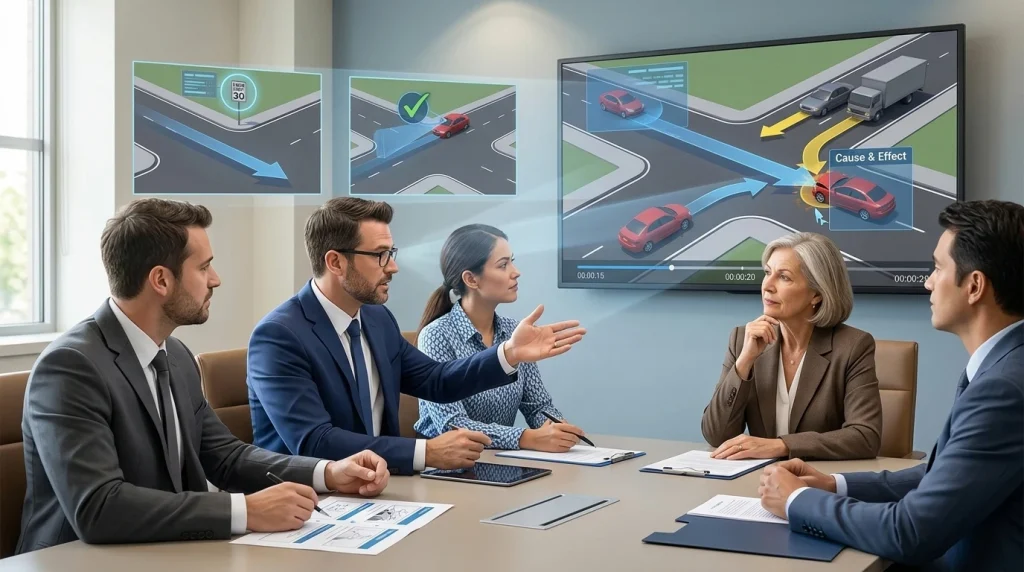
High-quality visuals can pay for themselves in more than one way, especially when they shorten the path to resolution.
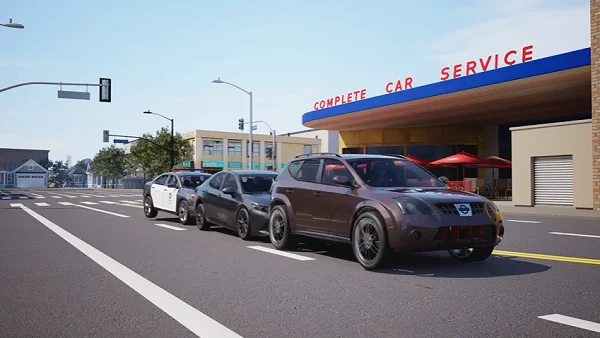
A practical example: In a multi-vehicle collision, written descriptions of speed changes and lane movement can blur together quickly. A verified animation, built from the record and expert analysis, makes the dispute concrete. That clarity often impacts mediation, because it reduces the defense’s ability to argue “it is unclear” when the sequence is shown consistently with the evidence.
That is the real return. Not flash. Not style. Measurable clarity that changes how the case is understood.
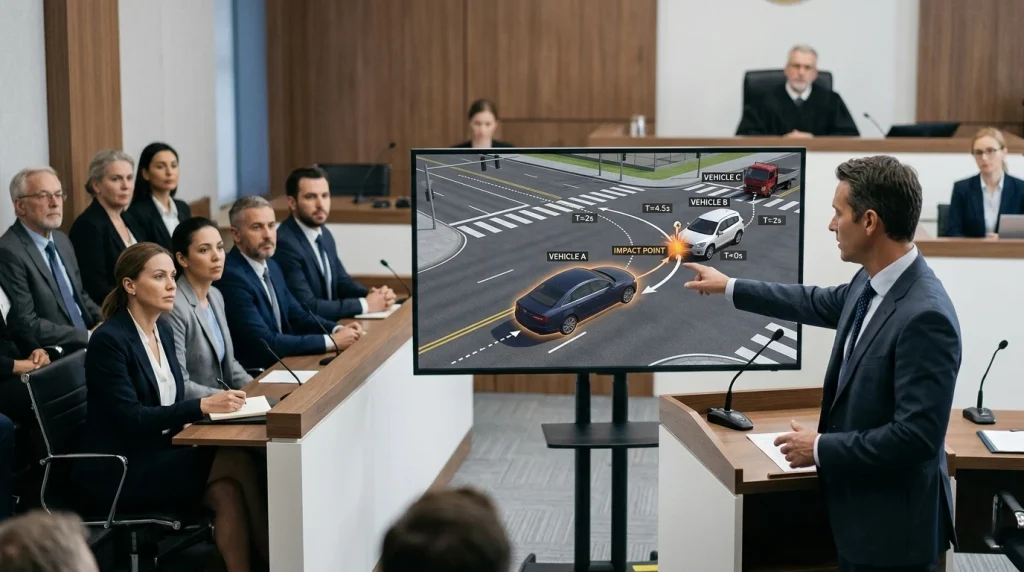
Accident reconstruction is where facts meet physics, and where misunderstandings can quietly derail a strong case. An accident reconstruction animation gives your team a disciplined way to show sequence, timing, visibility, and mechanics, without relying on jurors to translate technical testimony in their heads.
This work is not about making something dramatic. It is about taking the case record and expert analysis and turning it into a visual that a jury can follow, a mediator can assess, and opposing counsel can meaningfully respond to.
Common scenarios where accident reconstruction animations create immediate clarity include:
Lane changes, point of impact, braking, sightlines, signal timing, reaction windows, and vehicle movement. We frequently build these from scene measurements, photographs, video footage, vehicle specifications, and reconstruction expert calculations. When the record has gaps, assumptions are flagged and reviewed rather than quietly “filled in.”
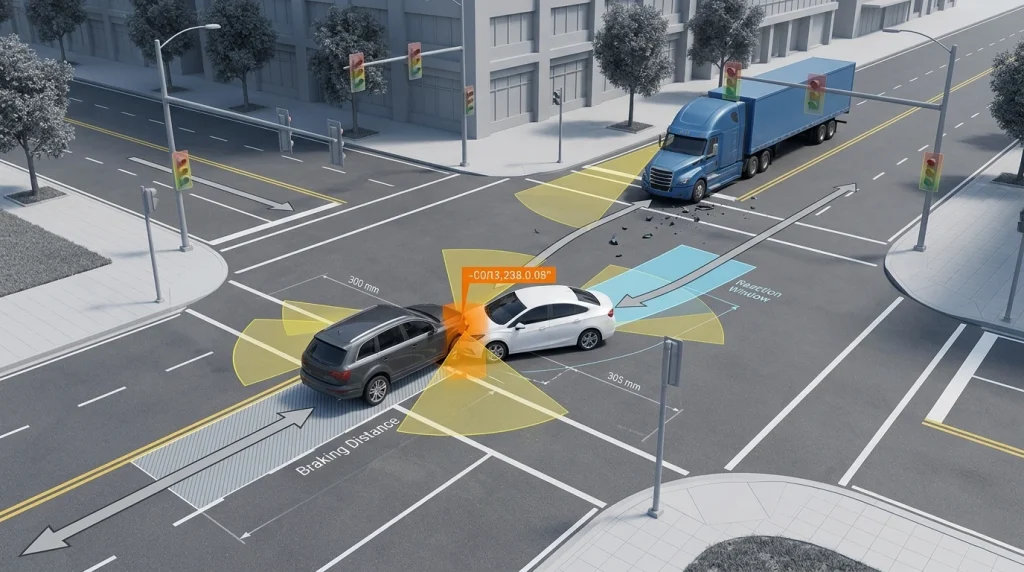
The “accident” is not always a crash. It can be a missed timeline, a delayed diagnosis, an incorrectly performed procedure, or an injury mechanism that is hard to explain with anatomy alone. Here, the visual must align tightly with the medical record and the testimony plan, so it teaches without overstating.
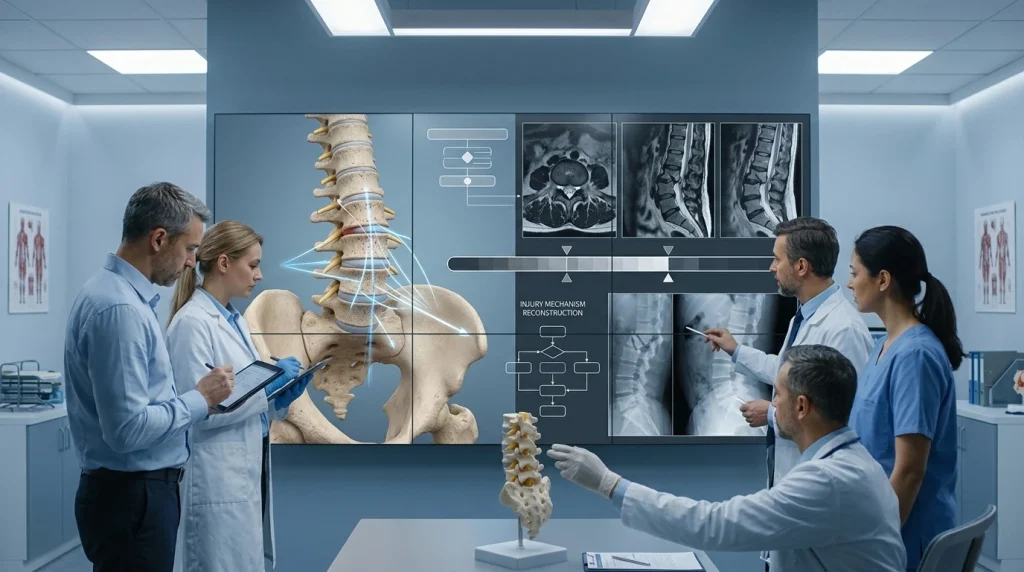
Many product cases turn on how a failure occurred, what the user did, what the product did, and what safety features were present or missing. A reconstruction can show component relationships, hazard zones, and the sequence of events in a way that makes technical causation understandable.
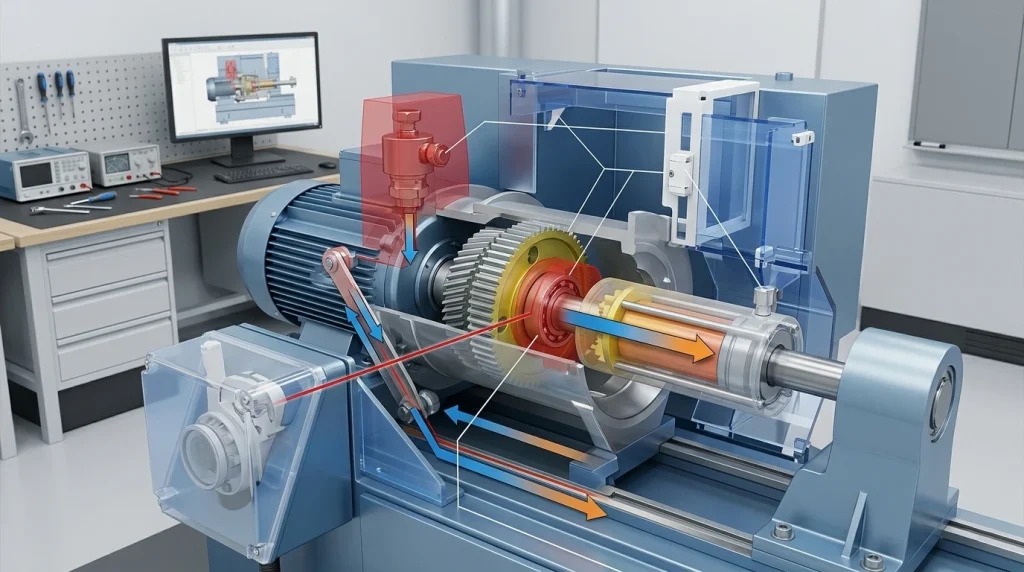
Collaborating with Legal Animation was truly worthwhile. They grasped the complexities of our legal ideas and turned them into straightforward, polished animations that enhanced the engagement of our case presentations. Their focus on specifics and understanding of legal communication was evident from the beginning.
The team’s skill in depicting intricate legal processes exceeded my expectations. They invested time to understand exactly what I needed, and the finished animation enabled me to clarify a complex issue to a client effortlessly. It’s uncommon to encounter creatives who truly get legal terminology, and they do.
We created a set of legal educational videos for internal training, and the outcomes were excellent. The animations were expertly done, precise, and exceptionally well-timed. What I valued most was the team’s responsiveness and patience during the entire process. Strongly endorsed.
Legal Animation offered a new viewpoint on the presentation of our legal arguments. Their visuals provided clarity and credibility to our materials that words alone could not. The team was engaging and was truly committed to the success of our project.
I utilized Legal Animation’s animation services for a legal education program, and my students provided overwhelmingly positive feedback. The videos clarified complex subjects while maintaining precision. They clearly take pride in their work and have an exceptional understanding of the legal sector.
Jurors do not decide cases by reading spreadsheets in their minds. They decide based on what they understand, what they trust, and what feels consistent when the evidence is discussed.
That is why law animation has real narrative power when it is done professionally. It does not replace the record. It gives the record a structure.
A well-built animation helps the courtroom do three things:
See the sequence
When timing is disputed, visuals reduce confusion. A jury can track “before, during, after” without losing the plot.
Understand complex data without drowning in it
Speed calculations, medical timelines, engineering concepts, and multi-factor causation can be accurate and still feel inaccessible. Animation translates that complexity into something teachable, while still pointing back to the underlying source materials.
Stay anchored during testimony
In direct and cross, the visual becomes a shared reference. That reduces the risk of jurors mishearing, misremembering, or inventing their own mental picture.
Used correctly, animation creates coherence across opening, witness examinations, and closing. It keeps the story consistent without turning it into theater.
The standard we follow is straightforward: the animation should be as persuasive as the facts allow, and no more than that. When the record is clear, it becomes a powerful aid. When the record has limits, the visual should show those limits with the same honesty. That is how you get clarity without sacrificing credibility.
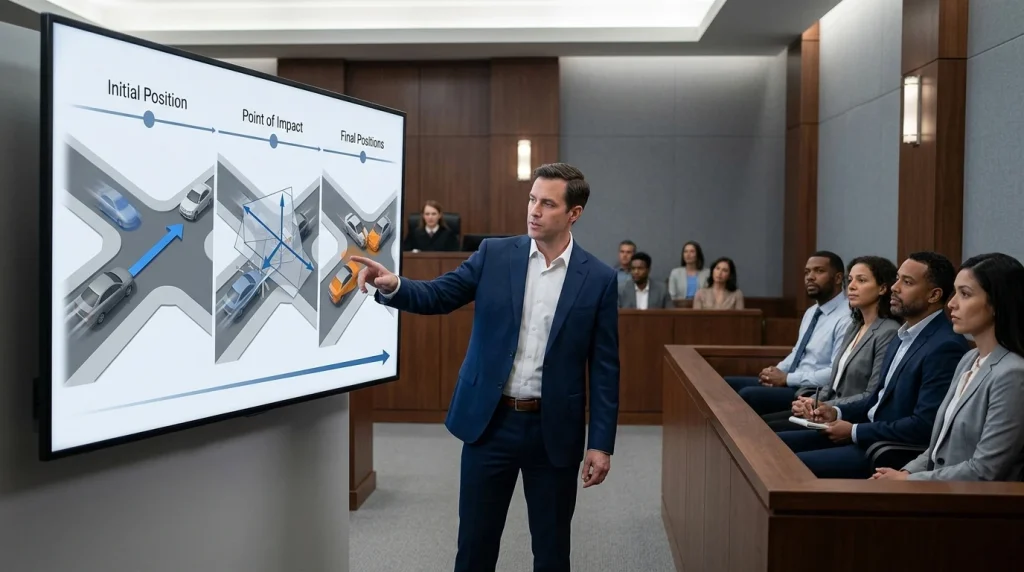
In most cases, forensic animation is treated as demonstrative evidence, meaning it illustrates or explains testimony rather than proving facts on its own. Your foundation is usually built through a qualified witness, often an expert, who can testify that the animation fairly represents the opinion or the underlying evidence.
A practical way to think about it is this: the animation is the teaching tool. The reports, photos, measurements, medical records, and expert opinions remain the proof.
They can be, but admissibility is not automatic. Courts generally look for relevance, a proper foundation, and reliability that the exhibit is what it claims to be, and they will weigh whether it risks confusing or unfairly prejudicing the jury.
From a production standpoint, this is why credible studios treat courtroom graphics as evidence-supported litigation tools, not marketing videos.
An animation typically illustrates a witness’s testimony or an expert’s opinion. A simulation is usually presented as the output of scientific or technical modeling, and it can trigger heavier scrutiny because it is effectively “running the math” of a theory.
This distinction matters because it affects how you lay the foundation, what disclosures you may need, and what objections you should expect.
To start strong, we need the core materials that control sequence, distances, and timing. The most common inputs include scene photos, video, measurements, reports, and your expert’s analysis.
A reliable starter packet usually includes:
Better inputs do not just improve realism. They reduce assumptions, which reduces admissibility risk.
Most of the time, yes. If your visual is tied to reconstruction, medicine, engineering, or human factors, having the right expert early makes the visual easier to defend because the expert can confirm what the animation is illustrating.
If the deliverable is a simpler demonstrative, like a clean timeline or map, you may not need expert involvement. But for anything that depicts mechanics, forces, or causation, expert alignment is the safer path.
Accuracy comes from building the visual directly off medical records and expert guidance, then locking the animation to what the testifying witness can comfortably support. In personal injury animation, the goal is clarity, not drama.
In practice, accuracy controls usually include:
Timelines and simple courtroom graphics can often move quickly, while high-detail 3D models and full medical animations take longer because they require more modeling, review, and verification.
What affects the schedule the most:
If trial dates are tight, the smart play is to phase the work. Start with the visuals you need for mediation or expert prep, then expand into trial-ready deliverables.
Cost varies widely. Many providers describe pricing as ranging from a few thousand dollars to tens of thousands, depending on length, complexity, and the amount of modeling and verification required.
The biggest cost drivers are:
A good quote should explain what is included, what counts as a revision, and what assumptions the bid is based on.
Yes. In fact, many teams commission visuals first for mediation and depositions, then refine them for the final trial presentation. Visuals often reduce confusion early, which can shift negotiation posture and shorten the path to resolution.
We typically package deliverables so they work across settings:
It depends on your jurisdiction, judge, and how the visual is used. Sometimes visuals are admitted; other times, they are used as illustrative aids to help explain testimony without being received as an exhibit. A newer Federal Rule specifically addresses “illustrative aids,” and courts still wrestle with the line between what gets admitted and what is used only to assist understanding.
Practically, this is why we build every project with a foundation in mind. Even if you plan to use the visual as a demonstrative aid only, you still want it accurate, sourced, and easy for a witness to authenticate.
Let Us Help You Seek & Illustrate The Truth
+800-385-0449
21255 Burbank Blvd, Woodland Hills, CA 91367
Mon-Fri 09:00AM - 06:00PM