
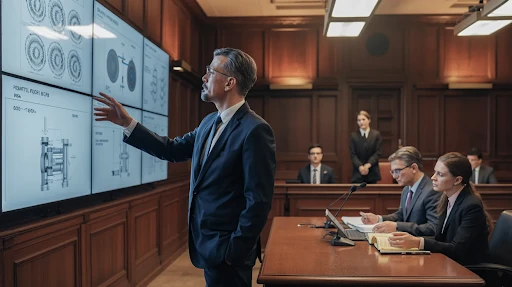
A strong patent expert witness can have a real effect on how an inter partes review unfolds. In these matters, the issue is not only whether the expert understands the technology. They also need to understand the patent record, the pressure points in the challenged claims, and how their opinions will hold up once opposing counsel starts testing every sentence.
That is what makes patent expert work different from more general litigation support. The role is narrower, more procedural, and much less forgiving.
Why a Patent Expert Witness Matters in an IPR
An inter partes review of patents is not ordinary patent litigation. It is a PTAB proceeding with its own pace, its own focus, and its own way of pressuring the record.
The panel at the Patent Trial and Appeal Board may have technical backgrounds, but that does not mean the judges will automatically understand the specific technology at issue or the inventors’ reasoning. That gap matters.
A good expert helps close it.
That does not mean flooding the record with jargon. It means explaining the technology in a way that still fits the claim language, the prosecution history, and the legal standards the tribunal is applying. A weak expert may know the science and still miss the larger task.
A strong one understands that the declaration has to do more than sound smart. It has to support the patent owner’s position in a disciplined way.
Start With the Prosecution History
One of the fastest ways to weaken an expert declaration is to focus on the technology while skimming the patent’s history.
That is a mistake.
A careful review of the prosecution history often tells you where the real fight will be. It shows what the inventors argued, what the examiner pushed back on, and how the claims were framed on the way to issuance.
In practice, that history may run long, but the useful points are often concentrated in the office actions and responses. That is where a patent expert witness usually finds the context needed to avoid careless opinions later.
This is also where technical storytelling starts. Some litigation teams use a courtroom animation company to help explain a patented process or system visually, especially when the underlying technology is hard to grasp from text alone.
In a patent case, though, the visual cannot drift away from the prosecution record. It has to track the theory that the expert can actually defend.
The Declaration Has to Show Its Work
A strong IPR declaration usually feels careful from the start. It explains the expert’s qualifications in a way that is relevant to the case, not just impressive in the abstract. It identifies the materials reviewed with enough honesty that opposing counsel cannot expose avoidable gaps later. It also stays grounded in the actual documents.
That sounds basic, but this is where experts sometimes create trouble for themselves.
If the list of reviewed materials is incomplete, sloppy, or too casually assembled, cross-examination gets easier for the other side. If outside references or simple searches influenced the thinking but never made it into the record, that can become its own side issue. In a technical dispute, small credibility cracks matter.
The same problem can show up with visuals. A team that normally works on personal injury animation services may be excellent at reconstructing motion and injury sequence, but patent disputes usually demand a different kind of precision. The pacing is different.
The purpose is different. The audience is different. Technical tutorials in a patent matter need to educate without oversimplifying the claim dispute.
The POSITA Section Deserves More Care
Some parts of an IPR declaration feel easy until they are not. The level of ordinary skill in the art, or POSITA issue, is one of them.
Lawyers sometimes treat it like a standard box to check. It is not.
The definition of a person of ordinary skill in the art can shape how the patent, prior art, and claimed invention are all understood. If the POSITA is defined too loosely or too aggressively, the opposing side may attack the whole framework of the opinion. In some matters, that section barely draws attention. In others, it becomes the focus of a major deposition time.
That is why the expert should think through it carefully. What background would someone have had at the time of the invention? What training or practical experience matters? What kind of person would have been hired to do similar work in the field at that time? Those are not filler questions. They often sit underneath the rest of the analysis.
Relevant Legal Standards Still Have to Be Applied Well
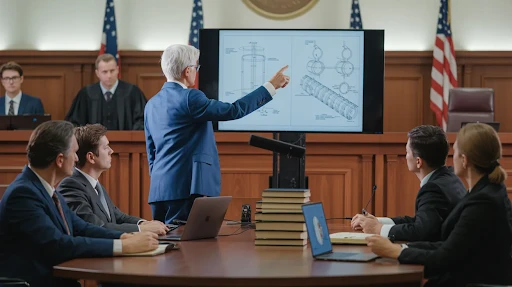
Experts are not there to act like lawyers, but they do need to work within the relevant legal standards that counsel is relying on. In IPR work, that usually means understanding how the report is addressing anticipation, obviousness, enablement, or related issues without wandering into legal arguments the expert cannot own.
This is where discipline matters.
A useful declaration does not try to do everything. It explains the technical reasoning cleanly and ties it to the disputed claims. It also handles the grounds for invalidation carefully. Bringing different references together is not enough on its own. The expert has to show why a POSITA would have combined them in a meaningful way at the time of the invention.
That is a higher bar than many people think.
And again, the visual layer has to match that discipline. Teams known for medical malpractice animation services often understand how to explain sequence and technical detail to non-specialists, but patent visuals require a different kind of restraint. The job is not emotional persuasion. It is structured clarity.
Depositions Can Change the Entire Feel of the Case
IPR depositions are often described as a kind of paper trial, and that is not far off. Once the declaration is in, the expert’s job shifts. Now the question is whether the opinions survive cross-examination without unnecessary concessions, loose phrasing, or damaging sound bites.
That is where preparation matters.
A good witness does not try to outtalk every question. They stay responsive, measured, and tied to what they actually wrote. Fatigue matters too. So does tone. A technically correct witness can still lose ground if they get defensive, drift beyond the declaration, or start sounding argumentative.
This is also why some firms use technical visuals with caution. A vendor that also handles accident reconstruction animation services may be excellent at modeling sequence and mechanical logic, but in an IPR setting the exhibit has to stay tightly aligned with claim analysis and expert reasoning. If it looks broader than the opinion, it becomes a liability instead of a help.
Frequently Asked Questions
What Does a Patent Expert Witness Do in an IPR?
A patent expert witness reviews the patent, prior art, prosecution history, and technical issues at the center of the dispute, then provides opinions that support the party’s position in the IPR proceeding.
Why Is Prosecution History So Important for a Patent Expert Witness?
It shows what was argued during examination and often reveals the points that matter most when the challenged claims are later tested in an inter partes review.
What Is POSITA in Patent Cases?
POSITA stands for person of ordinary skill in the art. It is a framework used to assess how a skilled person in the relevant field would have understood the invention at the time.
What Makes a Strong IPR Declaration?
A strong declaration is specific, well-supported, tied to the record, clear about materials reviewed, and careful in how it handles technical reasoning and claim analysis.
Why Can Depositions Be So Important in an IPR?
Because the expert’s answers can strengthen or weaken the written declaration. A poorly handled deposition can create problems that were not obvious on paper.
Final Words
A patent expert witness does much more than explain technology. In an IPR, the expert has to understand prosecution history, define the right POSITA framework, apply the right technical reasoning to the legal issues in play, and survive deposition without losing the thread of the declaration.
That is why patent expert work is so case-sensitive. The strongest experts are not just technically qualified. They are careful, disciplined, and able to teach the tribunal what matters without stepping outside the record.
Related Articles: