Most lawyers have had this moment. The facts look manageable at first, then the file opens up, and suddenly the case is full of things that do not explain themselves. Scan reports. Failure analysis. Speed calculations. Surgical notes. Worksite standards.
A witness may describe what they saw, but that still leaves the hard part. What did it mean? In cases like that, expert witness services are not a nice extra. They are often the piece that turns a pile of records into an argument people can actually follow.
That matters more than people admit. A case can be strong on paper and still fall flat in the room if the technical side never becomes clear.
Some Evidence is Real But Still Hard to Use
Lawyers deal with this all the time. The evidence exists. That is not the problem. The problem is that raw evidence does not always carry its own meaning.
Take a spinal injury claim after a rear-end collision. One side says the crash caused the symptoms. The other says the imaging shows long-term degeneration and the collision only stirred up an existing problem. The records are thick.
The language is clinical. The jury has no reason to know what a disc protrusion means, or when a radiology finding matters, or why timing matters so much in causation.
That is where an expert earns their place.
A good expert does not simply arrive and say, “I agree with this side.” That is weak work. Useful experts sort, explain, narrow, and test. They tell the court what fits the evidence, what does not, and where the real dispute sits. Sometimes they help a claim. Sometimes they expose a hole in it. Either way, they make the case more honest.
That is one reason serious trial lawyers bring experts in early. Not just before testimony. Early enough to shape how the case is understood.
The Jury Does not Live in Your Client’s Industry
This point sounds obvious, but it gets ignored. Jurors are asked to make decisions about medicine, engineering, architecture, trucking, manufacturing, and workplace safety without having worked in those fields. They are not supposed to be specialists. They are supposed to weigh credibility and facts.
That creates a real problem in technical litigation.
If the explanation is too dense, the case starts slipping away. Not because the lawyer is wrong. Not because the expert is unqualified. It happens because people stop being able to picture what the lawyer is talking about.
Once that happens, they start relying on instinct instead of analysis. That is bad news for any case built on sequence, force, mechanism, or standards of care.
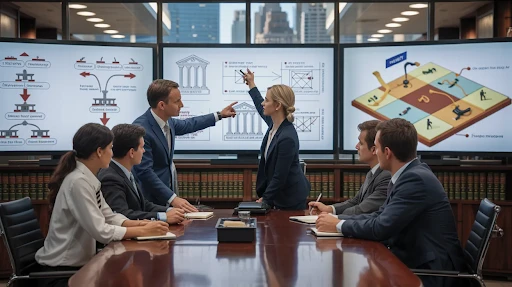
This is also why many firms do not stop at reports and testimony. They bring in a courtroom animation company when the case needs a cleaner way to show movement, timing, anatomy, or process. Not to decorate the file. To stop the jury from getting lost in it.
The difference is practical. A juror may not remember a long spoken explanation of visibility angles or surgical positioning. They often do remember a clear visual that shows where someone was, what happened next, and why that detail matters.
Experts are Often Most Useful Before Trial
People talk about experts as if their main job starts when they take the stand. In reality, a lot of their value shows up much earlier.
A solid expert can tell a legal team whether its theory makes sense before months are spent building around it. That can change the settlement posture. It can change which documents get priority. It can sharpen deposition questions. It can also keep a lawyer from leaning too hard on a point that sounds persuasive at first but will not survive scrutiny later.
That kind of course correction is not glamorous, but it saves cases.
Say a lawyer is handling an injury claim from a warehouse fall. The client says the shoulder damage came from the incident. The medical history, though, shows earlier treatment for similar pain.
An expert can help separate what is new, what may have been aggravated, and what cannot fairly be pinned on the fall. That is not just trial prep. That is case judgment.
The same thing happens in auto cases. Teams may use personal injury animation services when they need to show how a body moved during impact, why a certain injury pattern makes sense, or why the claimed injury does not match the event being described.
But that work only gets real traction when it is anchored in credible expert analysis. Without that base, it is just visuals.
And courts can spot the difference.
Medical Cases Go Sideways When Nobody Speaks Plainly
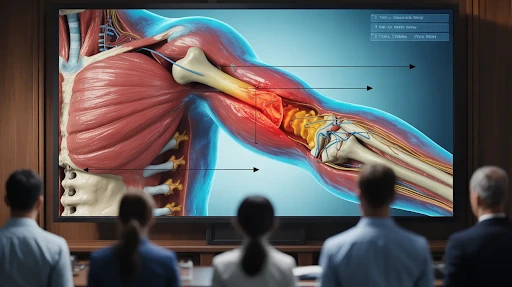
Medical negligence files are a good example. They are full of technical language, but the core issue is usually simple once somebody strips it down. What should have happened. What happened instead? What harm followed.
That sounds straightforward until the facts get buried in charts, abbreviations, procedure notes, and specialist language. A jury may hear a ten-minute explanation and still miss the actual turning point in the case.
Was the diagnosis delayed? Was a warning sign missed? Was a structure damaged during a procedure? Was the patient monitored properly after surgery? Those are concrete questions, but they do not stay concrete if the explanation is packed with jargon.
That is why these cases often lean heavily on visual support. Teams working with medical malpractice animation services are usually trying to make one thing plain: where the care broke from the expected path, and what that break caused. The visual is useful because it gives the medical opinion a shape people can follow.
Still, this only works when the animation stays disciplined. In legal work, flashy is not helpful. If a visual feels exaggerated, it can backfire. Judges notice that. Opposing counsel definitely notice it. The stronger approach is usually quieter. Accurate movement. Clean anatomy. No dramatic flourishes trying to do the lawyer’s job for them.
Reconstruction Cases Live or Die on Sequence
Crash litigation is another area where the story often turns on details that are easy to say and hard to picture. Speed. Distance. Reaction. Brake timing. Vehicle position. Sight lines. Road conditions. The witness may honestly believe one thing happened, but physical evidence may tell a more exact story.
That is why reconstruction experts matter so much.
They work from scene measurements, photographs, vehicle damage, event data, road geometry, and other physical clues. Their job is to build a supported explanation of how the event most likely unfolded. Not a dramatic one. A supported one.
For the lawyer, that matters because sequence decides a lot. Liability. Comparative fault. Avoidability. Causation. Sometimes damages too.
It is also why firms regularly use accident reconstruction animation services in the right kind of case. A spoken explanation of lane movement and timing can be technically correct and still difficult to absorb. Show the same sequence carefully, using the expert’s analysis as the backbone, and the jurors have a far better shot at understanding it.
That does not guarantee agreement. It does give the facts a fairer hearing.
What Strong Expert Witness Support Looks Like in Practice
Law firms do not need an expert just to say something smart on the stand. They need someone who can fit into the reality of the case.
That usually means the expert can review a large record without getting lost in it, separate the important points from the noise, and explain those points in a way real people can follow. Not another report full of technical language. Not a witness who sounds impressive for five minutes and then falls apart under pressure.
The best expert witness support tends to show up in a few very practical ways.
First, the expert helps narrow the real dispute. That saves time. A lot of cases are crowded with side arguments that do not really move liability or damages. A good expert helps the legal team focus on what actually matters.
Second, the expert makes the case easier to present. That does not mean simpler in a lazy way. It means clearer. Jurors do not need every possible detail. They need the right details, explained in the right order.
Third, the expert gives the legal team a more realistic read on risk. Some opinions help the case. Some do not. Some look stronger in a complaint than they do after a full record review. Smart lawyers would rather know that before trial than during it.
What Makes One Expert More Useful Than Another
Two people can have similar credentials and be miles apart in value.
A strong expert usually has three things going for them. They know their field. They stay disciplined. They can communicate without turning every answer into a lecture.
That last point matters more than people think.
Some experts know a subject inside and out but cannot explain it without drowning the room in terminology. Others oversimplify so much that they sound slippery. Neither works well in court. The useful middle ground is somebody who can keep the science, medicine, engineering, or financial analysis intact while still speaking like a person.
Lawyers also need experts who understand the boundaries of their role. Judges and juries tend to trust witnesses who stay in their lane. Once an expert starts stretching past the record or sounding like an advocate instead of a professional, the value drops fast.
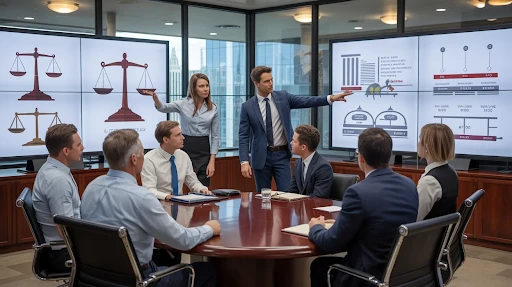
That is also why the working relationship matters. A dependable expert is not just hired for the final opinion. They become part of the case build. They help shape demonstratives, review assumptions, prep testimony, and flag weak spots before those weak spots get exposed in public.
Frequently Asked Questions
What are expert witness services in a legal case?
Expert witness services entail bringing in a competent person to analyze evidence, develop an opinion, and explain technical concerns in terms that the court can comprehend. Medicine, engineering, accident analysis, finance, and other specialist disciplines may all be included.
When should a law firm bring in an expert witness?
Usually early than people expect. If the case is about causality, standards of care, product failure, injury mechanism, or any technical problem, early expert advice can assist shape the strategy before faulty assumptions take hold.
Do expert witnesses only help at trial?
No. They often help long before the trial. An expert may evaluate documents, test legal theories, provide support for depositions, aid with mediation strategies, and assist the team in determining which evidence is credible.
Can expert witness services be combined with legal animation?
Yes, and that is often where the presentation gets stronger. The expert provides the analysis. The visual support helps explain sequence, anatomy, movement, or failure in a way jurors and judges can follow more easily.
What should lawyers look for when choosing an expert?
Strong credentials are important, but they aren’t the complete picture. Lawyers should also look for clarity, discipline, courtroom poise, subject matter expertise, and the ability to explain technical concepts without seeming scripted or too academic.
Final Words
Complex cases usually break down in one of two places. Either the facts are flawed, or the explanation is. When the facts are there but the technical aspects are difficult to understand, expert witness services might be the difference between a confusing presentation and a powerful one.
The best results are frequently achieved by unambiguous expert analysis, early case engagement, and disciplined visual support that assists the court in understanding what the evidence demonstrates.