
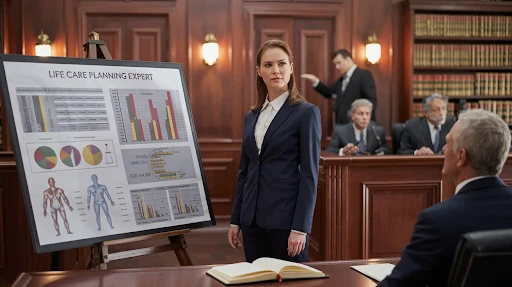
When a case involves permanent harm, expert life care planning becomes one of the clearest ways to show what the injury will actually cost a person over time. Not just in dollars. In treatment, support, daily function, and quality of life. In serious claims, lawyers cannot afford to leave future care in broad language.
The court, the mediator, and the other side need to understand the claimant’s current and future care needs in a way that feels concrete, medically grounded, and hard to brush aside.
That is where this work starts to matter.
Catastrophic Injuries Create a Bigger Damage Problem Than Many Cases Can Explain on Their Own
A severe injury case rarely stays limited to the first hospital visit.
What begins as trauma treatment often turns into surgeries, therapy, pain management, mobility changes, equipment needs, transportation issues, psychological strain, and long-term dependence on other people. That is exactly why catastrophic injuries force lawyers to think beyond immediate bills. The real damage picture usually lives in the months and years ahead.
A strong, comprehensive life care plan helps make that future visible.
Without one, the damage story often gets flattened. The legal team may have the records, the treating opinions, and the basic treatment history, but the larger picture still feels scattered. One file shows medication. Another shows rehab. Another hints at future procedures.
Another reflects emotional decline or reduced independence. Jurors and mediators do not naturally stitch those pieces together. Someone has to do that work for them.
That is why a Certified Life Care Planner can become so valuable in the right case. The role is not to inflate damages. It is to organize them in a medically supportable way.
A Good Life Care Plan Does More Than Add Up Expenses
People sometimes hear the phrase and assume this is mainly about numbers. It is not. The numbers matter, obviously, but cost is only the last layer.
The stronger plans begin with need.
What treatment is medically necessary?
What support is likely to continue?
What may have to change at home?
What kind of help will the person need if recovery plateaus?
How does the injury affect independence, work, movement, and day-to-day living?
Those questions push the case past surface damages and into something more honest. That is also why legal animation services can help in the presentation phase. In a hard injury case, the issue is not only whether a recommendation appears in a report.
The issue is whether the audience understands why that recommendation exists and how it connects to the injured person’s life.
A future care claim gets much stronger when it stops sounding like a list and starts sounding like a medically grounded reality.
The Best Plans Treat the Injured Person as a Whole Person
This is one of the strongest ideas in the reference material, and it holds up in actual litigation.
The most useful life care work does not reduce someone to surgeries and invoices. It takes a broader view. That usually means looking at medical considerations, psychological and emotional considerations, and the practical cost of carrying those needs over time.
That broader view matters because serious injuries do not stay in one lane.
A spinal injury may lead to mobility issues, but also chronic pain, depression, social isolation, caregiver strain, and major home changes. A brain injury may create cognitive problems, but also anxiety, employment loss, family pressure, and safety concerns that reach far beyond the original trauma.
If the damages story only talks about procedures and appointments, it misses a large part of the loss.
That is why the best expert life care planning work often reads with more texture than a standard medical summary. It accounts for treatment, but it also accounts for what the injury has changed.
Future Care Usually Turns on Details the Jury Cannot Picture Easily
This is where many cases start running into trouble.
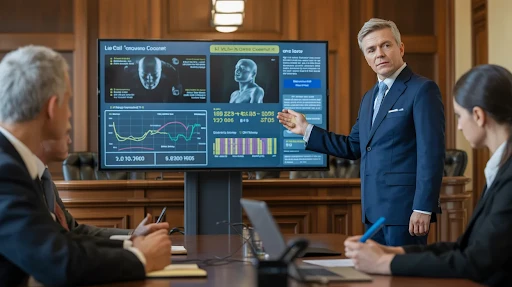
A lawyer may say the client will need ongoing therapy, future injections, periodic equipment replacement, home assistance, and modifications for accessibility. Every one of those things may be valid. Still, if the jury cannot picture what those needs look like in real life, the claim can start sounding abstract.
That is one reason firms sometimes use personal injury animation services in serious damage cases. Not to dramatize the injury, but to help explain body mechanics, physical limitation, long-term impairment, or the practical reason certain support is needed.
A visual can help the audience understand why a recommendation exists instead of hearing it as one more item in a long report.
That difference matters. People tend to value what they can actually understand.
What a Comprehensive Life Care Plan Usually Covers
The specifics vary by injury, but certain categories show up again and again in strong plans.
Medical treatment sits at the center, of course. That may include physician follow-up, medications, specialist visits, surgeries, and rehabilitation. But the plan often extends much further than that.
It may include home modifications, assistive devices, transportation changes, and caregiver support where the injured person can no longer function independently in the same way.
And then there is the cost side.
A credible plan does not just say care is needed. It lays out cost analyses that show what those needs are likely to require financially. That includes current treatment burdens as well as future medical expenses tied to the injury’s projected course.
In good work, the rationale is visible. The frequency makes sense. The duration is explained. The costs are not floating on their own.
That is a big reason these plans carry so much value in litigation. They give the damages claim shape.
These Cases Often Need Better Explanation, Not More Noise
Some legal teams respond to complex damages by throwing more material at the problem. More records. More charts. More testimony. More paper. That usually does not fix the communication issue.
In fact, it can make it worse.
What the audience usually needs is not more volume. It is a clearer line through the material. That becomes especially important in cases involving delayed recovery, long-term disability, pain disorders, or injuries where future care may continue to evolve. These are not easy cases to explain cleanly.
That is also why life care planning in catastrophic injury cases becomes such an important litigation tool. It helps lawyers move from loose concern to supported projection. It helps the damages claim sound reasonable instead of inflated.
And when the plan is presented well, it gives the court a much clearer basis for understanding why long-term support is part of the case.
A Strong Plan Also Helps Outside the Courtroom
Not every major damage fight gets decided at trial.
A lot of the real pressure shows up in mediation and other forms of negotiation, where both sides are trying to decide what the future-care story is really worth. In those moments, vague language hurts. So does overstatement. The strongest position is usually the one that sounds careful, specific, and hard to dismiss.
That is where expert life care planning starts, helping with settlement negotiations as much as courtroom presentation. A medically supported plan can help narrow arguments, reduce guesswork, and give the legal team a firmer foundation for supporting settlement discussions. It does not guarantee agreement, but it makes the damages position much easier to defend.
In some cases, especially those involving treatment disputes or delayed diagnosis, medical malpractice animation services may also help explain why future care became necessary in the first place. But the visual only works when the underlying plan is solid.
The plan still comes first.
Why Causation Still Sits Under the Entire Future-Care Story
A life care plan can be detailed, thoughtful, and professionally written, and still run into trouble if causation is weak.
That is the part lawyers cannot ignore.
Future care only becomes part of the damages case if the injury, and the long-term consequences flowing from it, can be tied back to the event being litigated. In some files, that link is clear enough. In others, it is the whole fight.
The defense may argue that the claimant had prior degeneration, earlier complaints, unrelated treatment, or a later event that better explains the current condition. Once that happens, the future-care discussion is no longer just about need. It becomes a question of source.
That is especially true in crash cases. A severe collision may lead to surgeries, chronic pain, reduced mobility, and the need for durable support, but the legal team still has to show how the mechanism of the incident connects to those outcomes.
In those situations, a traffic accident animation can help the audience understand the event itself before the case asks them to accept the longer-term medical consequences.
That kind of sequencing matters. If the jury cannot first understand how the injury happened, the later care recommendations start floating without enough foundation.
Rebuttal Work Matters More Than Plaintiffs Like to Admit
Plaintiff lawyers often focus on building the life care plan. Defense lawyers spend more time testing it. Both sides should take that part seriously.
A rebuttal does not have to wipe out the entire projection to be effective. It only has to show that certain recommendations are overstated, weakly supported, too frequent, too long, or not clearly tied to the injury event. That alone can change the value of the case.
This is where the quality of the original work really shows.
If the plan is built on broad possibilities instead of an evidence-based life care plan, it becomes easier to attack. If the recommendation for long-term assistance is not well tied to documented limitations, it becomes easier to narrow. If current medical costs are easy to prove but later projections are less disciplined, the gap becomes obvious under scrutiny.
Good rebuttal work usually does not sound theatrical. It sounds patient. It concedes what the record supports, then separates that from what looks padded or speculative. That is often more persuasive than an all-out denial.
The Best Presentations Keep the Plan Connected From Injury to Outcome
A future-care case gets stronger when it feels connected from start to finish.
The injury event leads to physical damage. That damage affects function. Reduced function creates treatment needs, support needs, and sometimes ongoing supervision or environmental change. Those needs carry financial consequences. That sequence should feel continuous. If it does not, the case starts sounding like disconnected categories of loss.
That is why presentation matters so much.
A life care planner may do excellent analytical work, but the legal team still has to present that work in a way that feels coherent. If the injury story lives in one bucket, the medical story in another, the emotional harm in another, and the costs in yet another, the jury may never feel the full shape of the case. A better approach is to show how those pieces inform one another.
That is also why some lawyers rely on accident reconstruction animation services in major injury matters. When the event mechanics are central to the damage’s story, the reconstruction can give the life care discussion a stronger base. It helps the audience understand the incident first, then the injury, then the long-term consequences.
Done properly, that progression feels logical rather than forced.
What Lawyers Should Expect From Strong Expert Life Care Planning
They should expect more than a stack of projections.
A strong plan should show medical necessity clearly. It should address rehabilitation services, likely treatment progression, reasonable cost support, and the practical impact of reduced function. It should also make room for the less visible parts of harm, including psychological and emotional considerations, not as filler, but as part of the real post-injury picture.
It should also hold together under questioning.
Can the planner explain why a recommendation appears in the report?
Can they tie frequency and duration to something real in the file?
Can they defend the care path without sounding exaggerated?
Can they walk a jury through the plan in plain language?
Those questions matter because expert testimony is often where the plan either becomes clear or starts feeling too abstract. The work has to survive both legal scrutiny and ordinary human attention.
Frequently Asked Questions
What Is Expert Life Care Planning in an Injury Case?
Expert life care planning is the process of evaluating an injured person’s long-term medical, functional, emotional, and support needs and turning those needs into a structured, evidence-backed future-care plan for litigation or settlement.
When Is Expert Life Care Planning Most Important?
It matters most in cases involving catastrophic injuries, permanent impairment, long recovery paths, or ongoing support needs that affect future damages in a major way.
What Does a Comprehensive Life Care Plan Usually Include?
It often includes current and future care needs, medical treatment, rehabilitation services, home modifications, assistive devices, caregiver support, future medical expenses, and related cost analyses tied to the injury.
Can Expert Life Care Planning Help With Settlement Negotiations?
Yes. A well-supported plan can strengthen settlement negotiations by giving both sides a clearer, more defensible picture of long-term care needs and projected damages.
How Do Visuals Help Present a Life Care Plan?
Visuals help explain injury impact, reduced independence, future treatment, and support needs in a way judges, juries, and mediators can understand more easily, especially in technically dense injury cases.
Final Words
Expert life care planning gives serious injury cases something they often lack without it: structure. It turns future medical treatment, functional loss, support needs, emotional impact, and cost into a clearer damage picture that courts and opposing parties can actually evaluate.
The strongest plans are medically anchored, specific, and realistic. The strongest presentations build on that work by showing how the injury changed the person’s life and why those future-care needs are not guesswork, but supported projections.
Related Articles: