
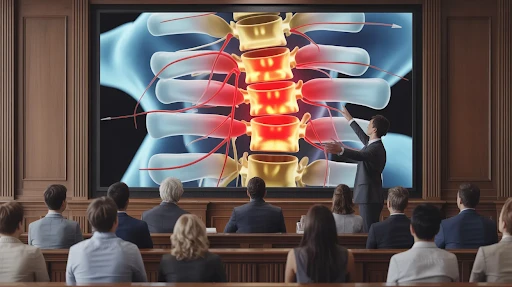
Medical animation explains complex injuries to juries by showing the part of the case that words often cannot show well. A doctor can say “nerve compression” or “disc injury,” but many jurors will still have no clear picture in their mind.
They may know someone is hurt. They may even believe the injury is serious. But they may not understand how it happened, where it happened in the body, or why it still causes pain.
That is the gap medical animation fills.
It takes the medical point and makes it visible. Not dramatic. Not scary. Just easier to understand.
Why Medical Injuries Confuse Jurors
Most people do not know the body in detail.
They know the basics. Bones break. Muscles tear. The brain controls the body. The spine is important. But once a case gets into discs, nerves, tendons, arteries, surgical tools, internal bleeding, or brain trauma, it becomes harder to follow.
That is not the jury’s fault.
Medical records are not written for regular people. They are written for doctors, hospitals, insurance teams, and lawyers. Expert witness testimony can help, but even a good expert may need a visual when the injury is hard to picture.
A simple animation gives jurors a starting point. They can see the injured area before the expert explains what went wrong.
A Visual Can Make the Injury Feel Real
Some injuries are invisible from the outside.
A person may look fine while dealing with nerve pain, spinal pressure, limited movement, headaches, or internal damage. That can be hard in court because the jury cannot see what the person feels.
Medical animation does not prove pain by itself. It shows the medical reason behind the pain.
For example, if a disc is pressing on a nerve, the animation can show the disc, the nerve, and the pressure point. If a shoulder tendon is torn, the jury can see why lifting the arm hurts. If a brain injury affects balance or memory, a visual can help explain what changed.
A courtroom animation company can take medical records, scans, and expert notes and turn them into courtroom visuals that regular people can follow. The best versions are simple. They do not try to impress. They explain.
It Helps the Expert Speak Like a Teacher
A medical expert may understand the injury perfectly. That does not mean the jury does.
Doctors are used to medical language. Jurors are not. An expert may say “cervical radiculopathy” and be completely correct, but the phrase may lose half the room.
Medical animation helps the expert slow the explanation down.
The expert can point to the visual and say, in plain terms, “This is the nerve. This is where the pressure is. This is why pain can travel into the arm.”
That is much easier to understand than a long medical answer with no image.
The animation should match the expert’s opinion. If the visual shows something the expert cannot support, it becomes a problem. The safest medical demonstratives for expert testimony are built from records, scans, reports, and the expert’s own review.
Personal Injury Cases Often Need the Link Explained
In personal injury cases, the jury usually needs to understand the connection between the event and the injury.
A crash happened. A fall happened. A heavy object struck someone. A machine pulled or crushed part of the body. The legal team may understand how that event caused the injury, but the jury may not.
This is where personal injury animation services can help.
An animation can show how the body moved during impact. It can show how force traveled through the neck, back, knee, shoulder, or head. It can also help explain why an injury that happened in seconds can lead to months or years of pain.
This matters when the other side says, “The accident was not serious enough to cause that injury.”
A clear visual can help the jury see why the injury makes medical sense.
Pain Is Hard to Talk About
Pain is personal. It is also hard to show.
An injured person can say, “My back hurts every day.” A doctor can confirm treatment. Records can show therapy, injections, medication, or surgery. Still, pain itself is not something the jury can hold in its hands.
Medical animation can make the source of pain easier to understand.
If the case involves nerve damage, the visual can show the nerve being affected. If it involves a fracture, it can show the break and why movement is painful. If it involves internal injury, it can show the damage inside the body.
That helps jurors understand that pain is not just a complaint. There may be a clear medical reason for it.
Medical Malpractice Cases Need the Story in Order
Medical malpractice cases are often about timing.
A test was not done. A warning sign was missed. A surgical step went wrong. Treatment came late. The patient got worse.
The hard part is helping the jury follow the order.
Medical malpractice animation services can show the body part, the treatment step, and the point where the problem began. This can help in cases involving surgical injuries, delayed diagnosis, birth injury, medication mistakes, or poor monitoring.
The visual should stay calm. It should not make the doctor look careless through dramatic effects. It should not use scary colors or shocking close-ups just to get a reaction.
A good medical animation teaches the jury what happened. It does not try to scare them into agreeing.
Some Cases Need Accident and Medical Visuals
Not every injury case starts with a medical mistake. Some start with an accident.
A crash, fall, or workplace incident may need one visual to show the event and another to show the injury. These two visuals should work together.
For example, a truck crash may first need a crash sequence. The jury may need to see speed, braking, lane position, or impact angle. Then the medical animation can show how that impact affected the spine or head.
That is where accident reconstruction animation services can support the first part of the story. The medical animation supports the second part.
If these visuals do not match, the jury may get confused. The accident visual should not suggest one type of movement while the medical visual suggests another. Everything should feel connected.
Keep It Simple Enough to Follow
A medical animation can fail if it tries to show too much.
Too many labels. Too many arrows. Too much movement. Too much text on the screen. Jurors may stop listening because they are busy trying to figure out what to look at.
Simple is better.
If the case is about a damaged disc, show the disc. If it is about a torn ligament, show the ligament. If it is about internal bleeding, show where the bleeding happened and why it mattered.
The point is not to teach a full medical class. The point is to help the jury understand the injury in this case.
That is why the best medical animation often feels quiet. It gives the jury just enough to follow the expert.
Demonstratives Help Jurors Remember
Trials give jurors a lot to absorb.
They hear names, dates, objections, medical terms, expert opinions, and legal instructions. Some details will blur together. That is normal.
A clear visual gives them something easier to remember.
That is where demonstrative evidence services can help. A medical animation, injury diagram, treatment timeline, or simple courtroom graphic can make one important point stick.
The visual should not replace the records. It should make the records easier to understand.
A good demonstrative does one job well. It helps the jury remember the injury, the cause, or the medical step that mattered most.
Frequently Asked Questions
How Does Medical Animation Help a Jury Understand Injuries?
It shows the injury visually, so jurors can see the body part, the damage, and how the injury happened.
Does Medical Animation Replace Expert Testimony?
No. The expert still explains the medical opinion. The animation only helps the jury see what the expert is describing.
What Injuries Can Medical Animation Explain?
It can explain spinal injuries, brain injuries, nerve damage, fractures, internal injuries, surgical injuries, and long-term pain.
Can Medical Animation Be Used in Personal Injury Cases?
Yes. It is often used when the injury is hard to understand from medical records or spoken testimony alone.
What Makes Medical Animation Strong in Court?
It should be simple, accurate, based on real medical evidence, reviewed by experts, and easy for jurors to follow.
Final Words
Medical animation explains complex injuries to juries by making difficult medical facts easier to see. It helps jurors understand anatomy, injury causes, pain, treatment steps, and long-term damage. It does not replace expert testimony. It supports it.
The strongest animations are simple, accurate, and based on real evidence. They help the jury understand the injury without confusion, guesswork, or unnecessary drama.
Related Articles: